





Proceedings Report
The second Meta Operations Conference (Metopcon II) was held at the Hellenic Club Woden, Canberra, on 23 October 2026. Its subject was the use of AI agents to run business processes, and the sovereign capability on which that use depends. The 10 sessions covered model capability and cost, data centre infrastructure, agentic operations, cyber defence, sovereign AI, agentified business processes, agentic software engineering, and the auditability of AI decisions.
The sessions reported that the cost of completing a task with AI fell sharply between April and October 2026 while capability rose. Hardware, memory, power and cooling constrain supply, and Australia is at a disadvantage on cooling and hardware lead times. Agents now operate infrastructure, defend it and run whole business functions, with people approving at defined points. Organisations stop short of operational use where AI decisions cannot be traced to rules. 6 questions remained in dispute at the close.
| Item | Detail |
|---|---|
| Event | Metopcon II, the second Meta Operations Conference |
| Date | 23 October 2026 |
| Venue | Hellenic Club Woden, Phillip ACT |
| Format | 10 sessions in a single room, with discussion from the floor |
| Scope | The sessions of 23 October 2026. The workshops of 24 October are not covered |
| Speakers | Not named. Companies are named where they are the subject of a case study |
| Figures | As presented at the conference, not independently verified. See Sources and limitations |
Principal findings
| Finding | Section |
|---|---|
| A frontier model completes a benchmark task for about US$1.50 and the cheapest open models for about US$0.20. Leading models are projected to pass 65 on a public intelligence index within 6 months | Models and cost |
| GPU lead times exceed 60 weeks. An expedited NVIDIA H200 card costs about A$120,000, against A$27,000 on a standard order | Infrastructure constraints |
| A production data centre was operated through plain-English requests. Known faults were repaired automatically and novel faults on human approval | Agentic operations |
| Open-weight models were used to find and exploit flaws up to 8 years old within days of release. Triage of findings remains a human task | Cyber defence |
| Sovereign AI requires control of hardware, model weights, the controlling company and the governing law | Sovereign AI |
| A car-sharing marketplace runs collections, customer service, finance, onboarding and sales with agents, and its staff manage the agents | Agentified business |
| A software agency's customers now write much of their own code with AI, and the agency has halved its staff | Software engineering |
| Organisations halt AI decision pilots at 70% to 80% accuracy where answers cannot be traced to rules. Compiling the rules into an executable model gives a full reasoning trace | Decision assurance |
Context
By an estimate given at the conference, 30% to 40% of the developed-world population uses AI for personal or business productivity. Most of that use is individual: a staff member with a chat assistant, a developer with a coding tool. Companies convert the time saved into lower operating expenditure. Few have reorganised a process around agents.
Australia sources nearly all of its frontier models from abroad, runs them on imported hardware and connects to the world through about 16 international undersea cables. Access to 2 frontier models was suspended for several weeks in mid-2026 for export-control reasons. By the account given at the conference, national productivity is at its lowest since records began 60 years ago, despite rising technology spending.
The conference addressed 2 questions. The first was what is required for AI to move from assisting individuals to running processes. The second was on whose hardware, under whose control and by whose rules that operation runs.
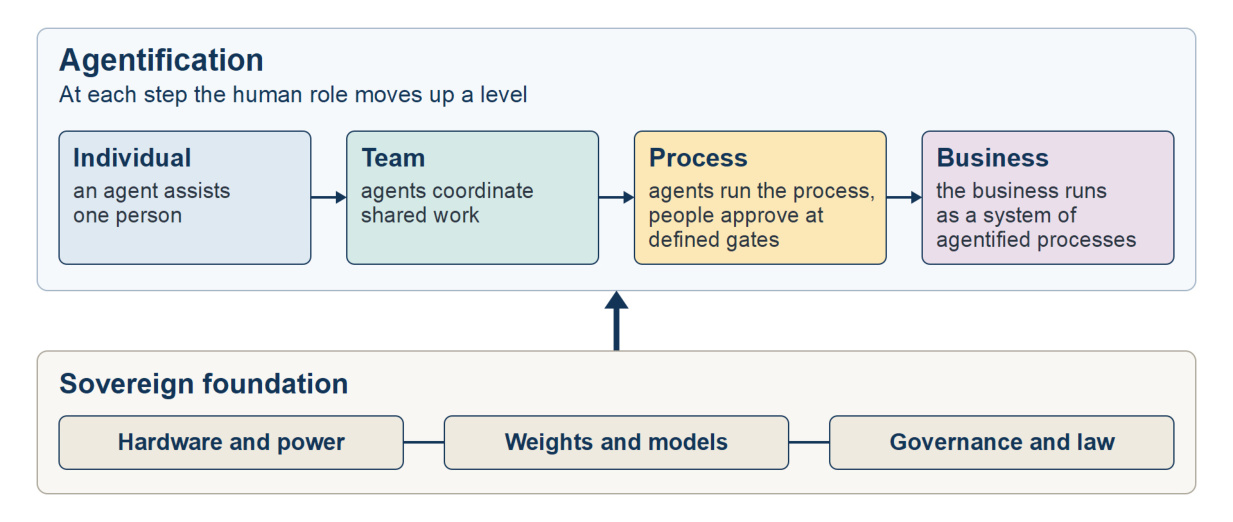
Figure 1. The subject of the conference. Agentification moves the human role up a level at
each step, and each step rests on hardware, models and law.
Programme
The sections that follow report the sessions in the order they ran.
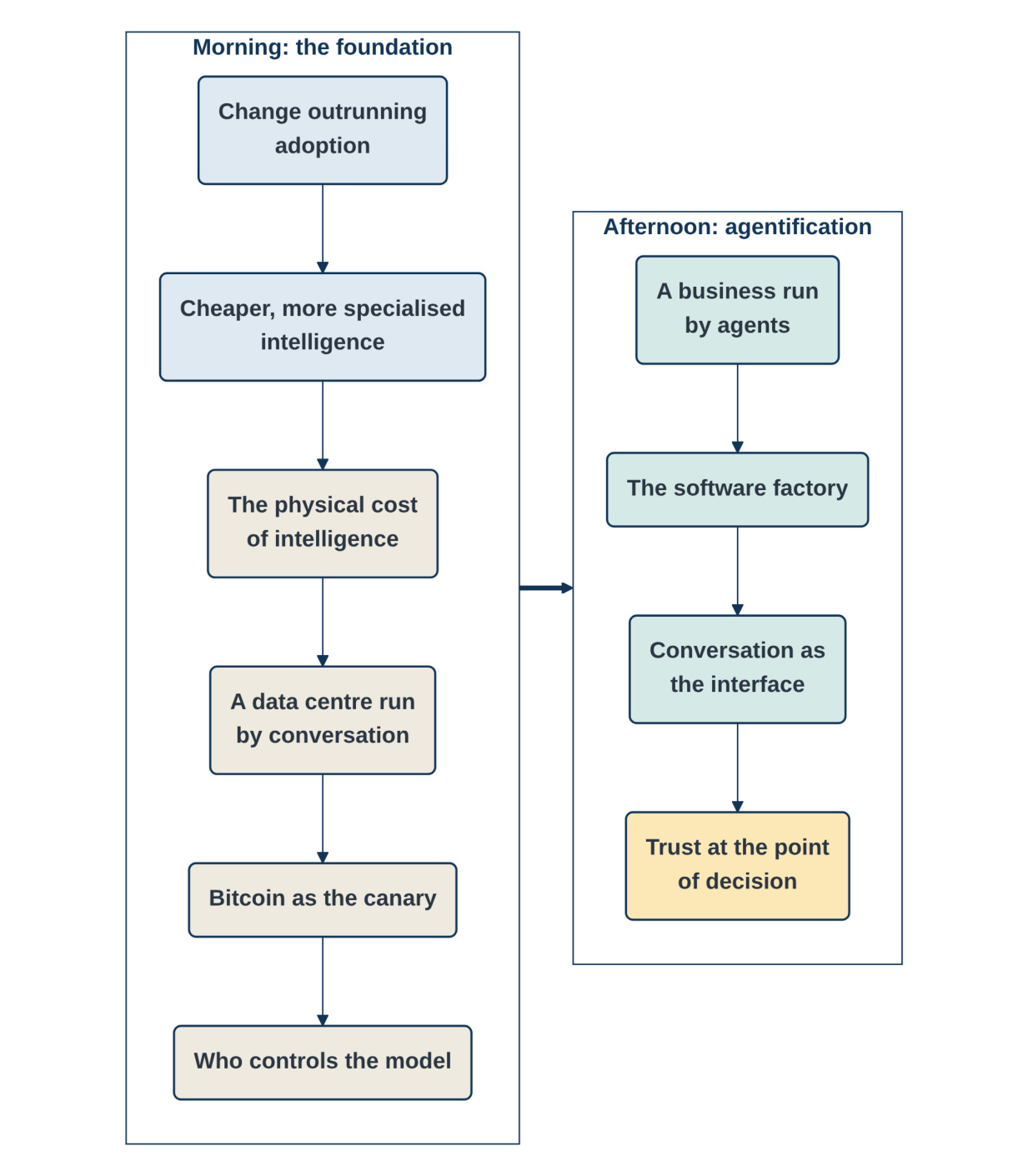
Figure 2. The sessions of 23 October 2026 in the order they ran, by subject.
Pace of change
The opening session placed AI in the history of technologies that drew predictions of social harm.
| Technology | Objection at the time | Outcome |
|---|---|---|
| Writing | Socrates held that it would destroy thinking | The objection survives because Plato wrote it down |
| Printing press | Too many books would dilute knowledge and confuse readers | Adopted |
| Steam engine | The Luddites broke machines in expectation of ruin | Drove the Industrial Revolution |
| Alternating current | It would kill people | Electricity became foundational |
| Internet and e- commerce | Disruption to established commerce | Embedded in daily life |
| Generative AI, from 2022 | Job losses, deepfakes, loss of control | Used by 30% to 40% of the developed-world population, by the estimate given |
The same questions recur with each technology: whether employment will be destroyed, whether the moral basis of society will suffer, who will hold control, and whether the technology is a fad. Computers were widely described as a fad in the early 1990s. The same mitigations also recur. Business finds other methods, new occupations emerge, institutions adapt and controls are introduced. Realised costs have differed from those predicted, and the falling price of AI tokens is the current case.
The interval between generational changes has shortened (Figure 3). For AI the session gave a judgement, not a measurement: 3 generational changes of comparable scale in 3 years. Alvin Toffler's Future Shock (1970) described a condition people suffer when change outpaces their capacity to cope. Whether legislatures can now legislate at the pace the technology changes was left open.
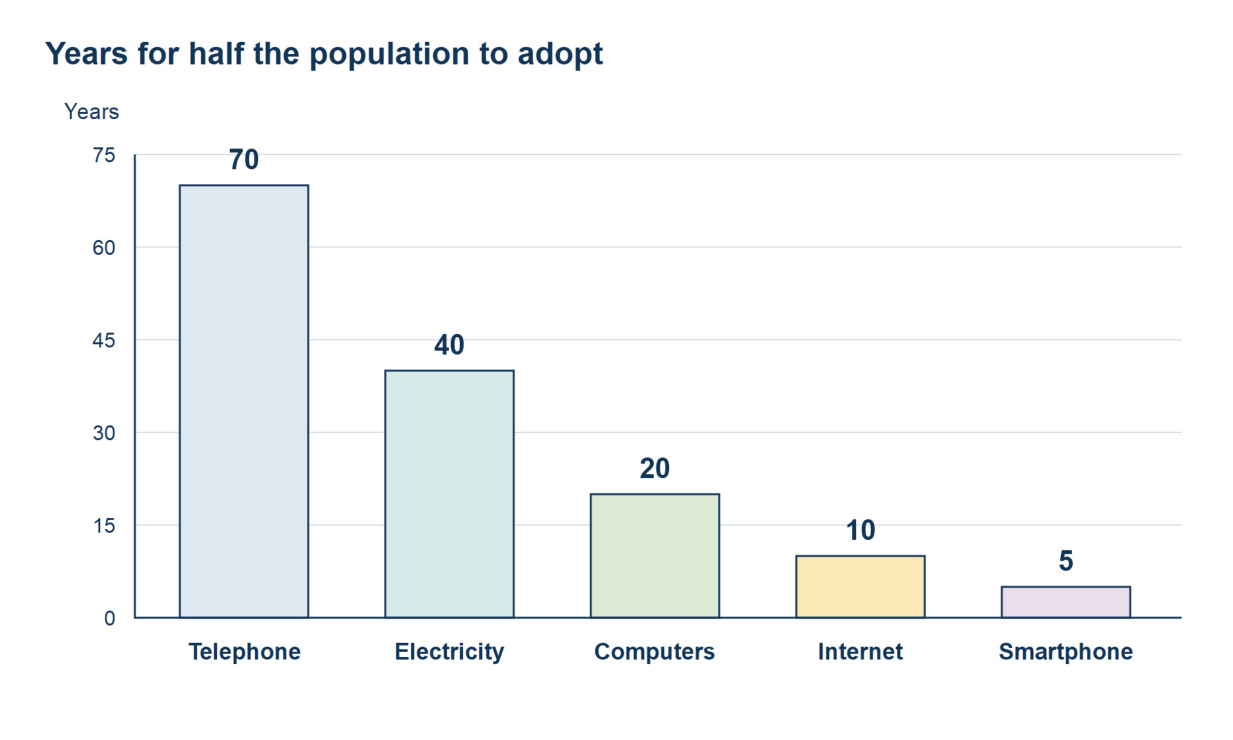
Figure 3. Years taken for half the population to adopt each technology, as presented. AI is not plotted; the estimate given was 3 generational changes in 3 years.
The precedent of new occupations is tested against the staffing evidence in Software engineering. Regulatory lag recurs in Models and cost and in Interfaces and commerce.
Models and cost
Cost per task
The tracking site artificialanalysis.ai plots models on an intelligence index derived from benchmarks against the cost of completing a benchmark task. It tracks 706 models, including open models such as Qwen, DeepSeek and GLM. Between April and October 2026 the efficient frontier on that chart moved towards higher intelligence at lower cost, with the largest single step in September from the latest GPT models. The projection presented was that leading models will pass 65 on the index within 6 months, at substantially lower cost.
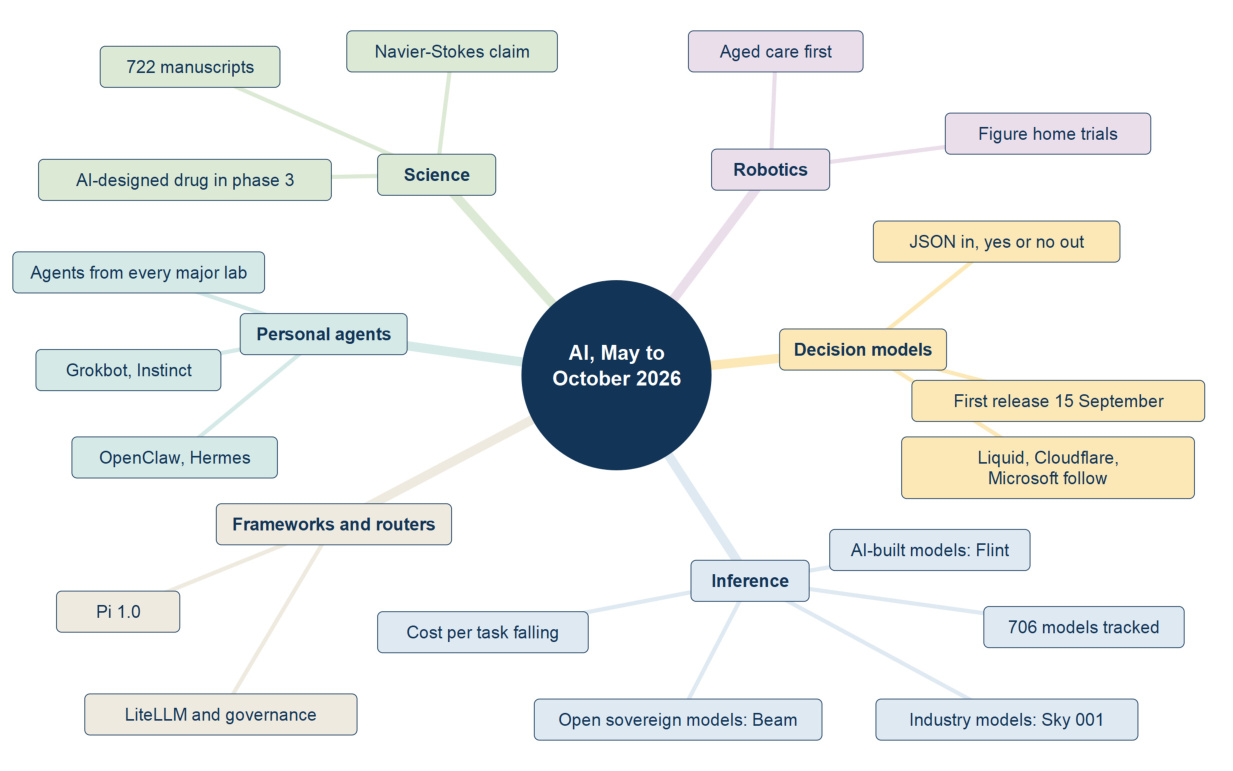
Figure 4. Developments between May and October 2026 reported in this section, by category.
The session gave 3 causes for the pace of model releases. More laboratories are releasing models. Laboratories use AI to build their next models. The major laboratories have moved from public internet data to data bought from organisations.
Price per million tokens is a poor guide to cost per task (Figure 5). A frontier model priced at US$50 per million output tokens completes a benchmark task for about US$1.50, and DeepSeek 4.1 Flash completes the same task for about US$0.20. The session treated demand for intelligence as rising as cost falls, with no evident ceiling. The infrastructure session disputed that these prices reflect cost.
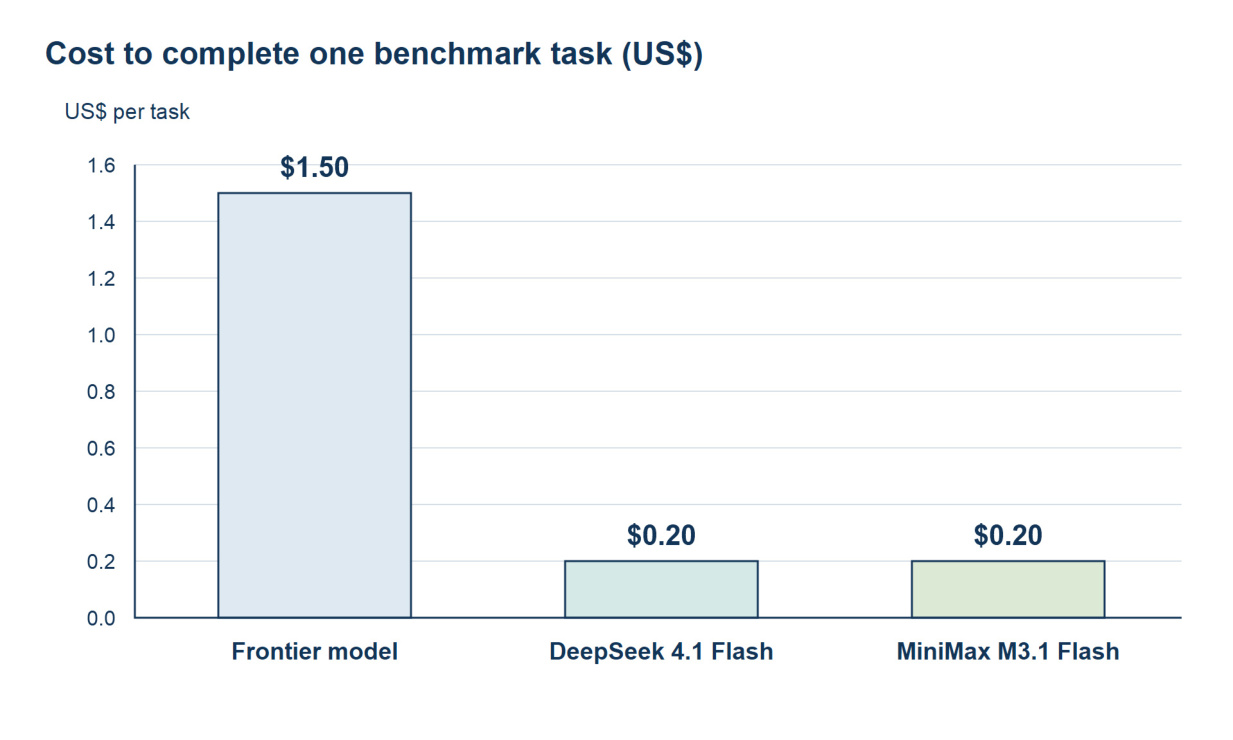
Figure 5. Cost per benchmark task, as presented. The frontier model is priced at US$50 per million output tokens.
Recent releases
| Model | Developer | Characteristics reported |
|---|---|---|
| Sky 001 | Skyfall AI | An engineering world model for CAD and building information modelling that produces designs and illustrated parts breakdowns. Public release planned for early 2027 |
| Muse Spark Open | Meta | 816 billion parameters. Meta had no comparable model 12 months earlier. DeepSeek 4.1 Flash outperforms it on cost and performance |
| Beam | Reflection AI, United States | 500 billion parameters, open weights. The developer helps governments post-train base models for sovereign use |
| MiniMax M3.1 Flash | MiniMax | About US$0.20 per benchmark task. Available through Ollama, Hugging Face and OpenRouter |
| Flint | Recursive | A coding model of 40 billion parameters, 2 billion active, that runs on a laptop. Built in under 4 months, by the developer's account largely by its own automated research system |
Flint runs frontier-level coding assistance locally, so code and ideas need not be sent to a cloud provider. The developer reported that its automated research system chose a sparser architecture with 10% faster decoding, devised new quantisation methods and wrote custom
kernels. Other teams were expected to replicate the method. A projection cited at the conference has a new model released every day from January 2027.
Providers retire models by reducing the servers allocated to them, which moves customers to newer versions. The session's advice was to build systems so that the model can be replaced without effect, since models will keep getting cheaper and better.
Decision models
The first decision model was released on 15 September 2026. Liquid, Cloudflare and Microsoft released competing models within 4 weeks, and the first model's developer was reported to have raised US$870m at a valuation of US$7.5bn. A decision model takes structured JSON input and returns a yes or no answer, or a probability, without explanatory text. It is cheaper and faster per task than a reasoning model, and its developer states that it does not hallucinate. A demonstration showed a decision model playing the game Doom at about 10 decisions a second.
Decision models apply wherever a person makes a gate decision in a workflow: whether to pay an invoice, or whether an invoice has the ABN, GST and address an Australian tax invoice requires. They now accept images, audio and video, which extends their use to inspecting printed circuit boards and checking rooftop solar installations for compliance. Enterprises are expected to run them alongside reasoning models. Their use is expected to extend to robotics, manufacturing and defence.
Personal agents
| Date | Development |
|---|---|
| November 2025 | OpenClaw, a personal assistant with a personality |
| 2026 | Hermes, a competitor to OpenClaw. Perplexity Computer, which handles email and shopping on prompt |
| August 2026 | Grokbot, launched through X. Users provide payment details and email credentials, and the agent acts for them |
| August 2026 | Instinct, with no user interface. Each user is given a phone number to message, and the agent makes reservations by voice |
| To October 2026 | Agents released by Google, Microsoft, Meta, OpenAI and Anthropic |
Few delegates used personal agents. The session expected rapid growth, and gave the example of an agent instructed to sell every item photographed in a folder: it identifies each item, lists it, negotiates with buyers and arranges postage.
Frameworks and routers
Agent frameworks allow AI-native applications to be built. Examples given ranged from LangChain and the Microsoft Agent Framework to Pi, a minimal agent harness released at version 1.0 in early October 2026, whose built-in agent rewrites its own code into what the user describes. In the example given, a salon receptionist tells the system to move a client from 11:00 to 15:00 instead of editing the booking through screens.
Model routers such as the open-source LiteLLM sit between an organisation's tools and its inference providers (Figure 6). They pin models to aliases by role and route each request to a suitable model. The added latency is small. Their governance functions are:
recording who requested what applying rules, such as whether information classified as protected may leave the organisation accounting for cost by user sharing a small number of subscriptions across all staff
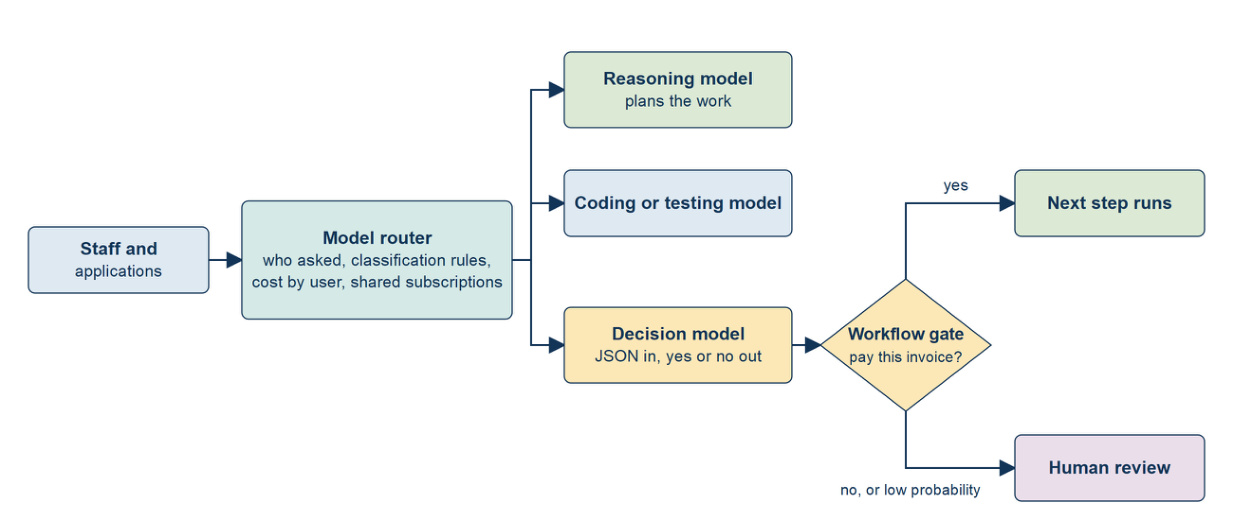
Figure 6. A model router governs each request and passes it to the model suited to the task. A decision model answers a gate previously answered by a person.
Because the router holds an alias for each role, a model can be replaced without changing any application, and the governance record is unaffected.
Science and medicine
AI disproved an Erdős conjecture during the period. On 8 September 2026 OpenAI published a claimed proof of the Navier-Stokes Millennium Prize Problem, written in the formal proof language Lean and about 38,000 pages long, which remains under review. A further 722 manuscripts of solutions to open problems followed at an average cost of about US$3 each, and mathematicians received them coolly.
The session also reported AI-assisted research in quantum computing and fusion, AlphaFold-based drug discovery, and a drug for pulmonary fibrosis designed entirely by AI that received its first phase 3 dose in September 2026. Some projections place longevity
escape velocity, the point at which medical progress adds more than a year of life expectancy for each year lived, between 2035 and 2040.
Robotics
Robotics is developing in the same pattern as AI inference: foundation models, accessible inference and developer ecosystems, with progress on joints, servos and hands. Physical safety is the main obstacle. How a household would stop an 85 kg robot that malfunctioned is unresolved. Figure has placed robots in about 64 empty homes, where staff create mess for the robots to clean, to collect data. Aged care, with its workforce shortages, is the expected first major market.
Some American homes may have autonomous robots within 12 months. Regulatory process is expected to delay overseas products in Australia by 3 to 5 years, and the session proposed that regulators use AI to shorten that process.
Outlook
Thousands of models are expected: general intelligence, national variants trained on different data, and many small specialist models coordinated by general ones. Firms holding decades of industry data are expected to build specialist models in microbiology, chemistry, physics and other fields within 12 months.
Infrastructure constraints
Cost of supply
The infrastructure session stated that consumer subscriptions of A$20 to A$50 a month are subsidised by companies buying market share, and do not reflect the cost of hardware, power and buildings. On that view, the per-task figures in Models and cost are prices, not costs. The disagreement is recorded in Unresolved questions.
Rack density
A typical rack drew 1 kW to 2 kW a decade ago. AI racks now reach 1,000 kW. Operators are moving to 800 V DC distribution because cabling that load at 240 V would be wider than the rack. Data centres are designed for a life of 15 to 20 years, so facilities 6 to 9 years old are limited in the density they can support. A facility designed in 2017 at 30 kW per rack across 100 racks can host AI equipment for that reason. A single 600 mm rack of the latest liquid-cooled NVIDIA equipment costs A$50m to A$100m, and a large deployment needs hundreds or thousands of them.
Cooling
| Method | Capacity per rack | Users | Characteristics |
|---|---|---|---|
| Liquid | 200 kW to 500 kW | Hyperscale and neocloud operators | Water enters at about 55°C, leaves at about 65°C and is cooled by fans alone. Colocation providers do not let customers share a loop, because contamination from a single server could destroy another customer's equipment |
| Air | About 80 kW with rear-door heat exchangers, perhaps 100 kW in future | Enterprises and colocation customers | Needs chilled water at about 20°C. An 8-GPU B300 server costs about A$1.5m, occupies about 10 rack units and draws about 15 kW, so 4 fit in a rack at about 60 kW |
Australian ambient temperatures typically exceed 20°C, so air-cooled operators run compressors for most of the year and have free cooling only at night and in winter (Figure 7). An enterprise running air-cooled AI in Australia has neither the scale of a hyperscaler nor the free cooling of a cooler climate.
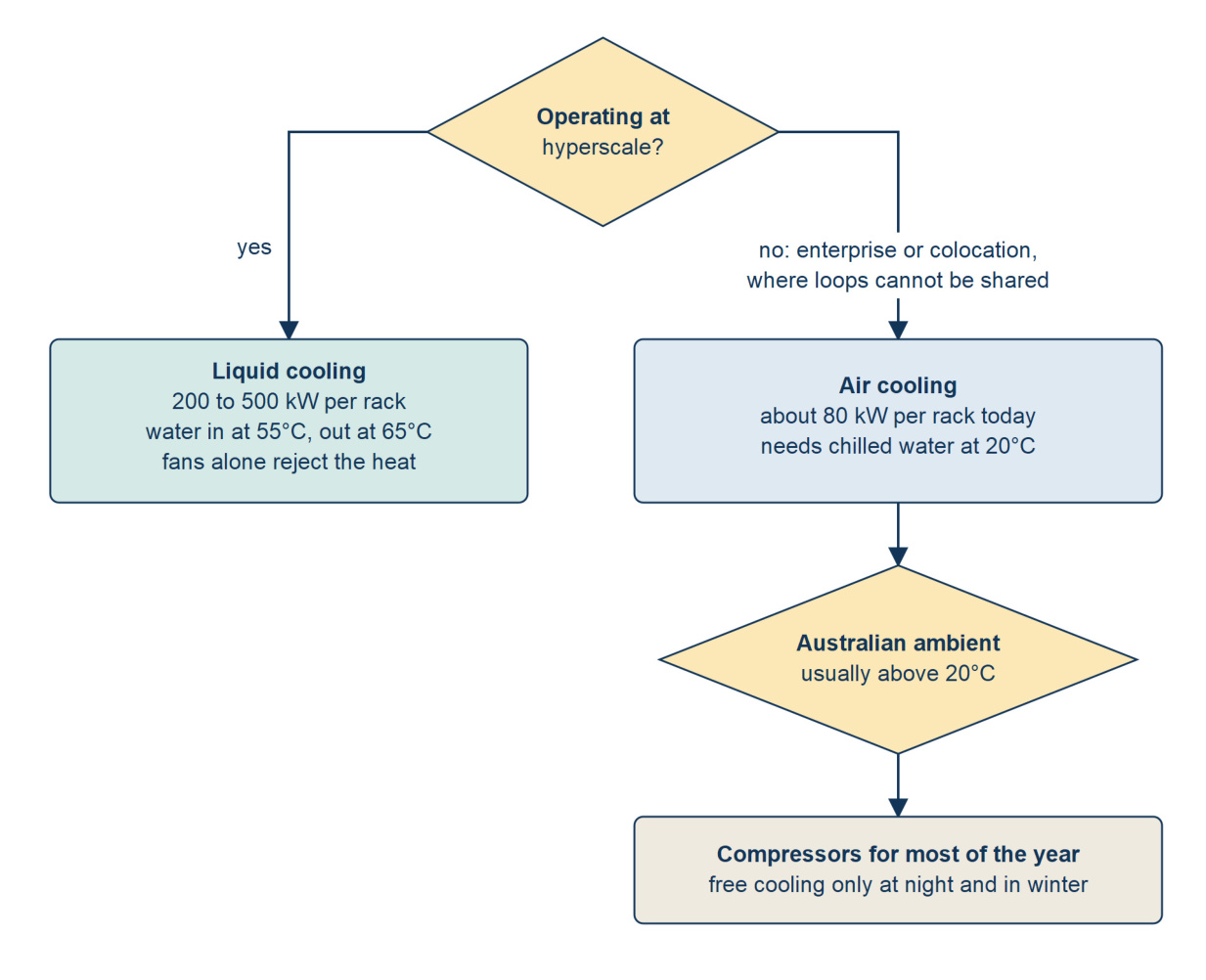
Figure 7. Cooling below hyperscale in Australia.
Power and water
Victoria has about 3 GW of available power and runs short 3 or 4 times a year, on days of about 45°C when household air conditioning peaks. Data centres hold contracts that require them to switch to their own generators on those days, which returns power to the grid. Water use depends on the cooling technology: refrigeration uses none and evaporative cooling does. Density has risen elsewhere in the facility as well. A single network link into a rack now runs at 1.6 Tbps, and a single drive holds 256 TB.
Hardware supply
GPUs and memory cannot be made fast enough. Production is concentrated in a few manufacturers, and the standard lead time for GPU hardware exceeds 60 weeks.
| Item | Earlier price | October 2026 |
|---|---|---|
| 64 GB DDR5 memory module, Dell Australia | About A$400, 24 months earlier | About A$22,000 |
| Dell server memory | 13-fold rise over 12 months | |
| NVIDIA H200 card, standard 60- week order | A$27,000 | A$27,000 |
| NVIDIA H200 card, expedited | About A$40,000, 6 months earlier | About A$120,000 |
| Bare-metal server hardware | Up about 600% in 6 to 12 months |
Expedited prices were rising by about 20% a week. A customer paid about A$3.5m for more than 30 H200 cards delivered in 2 weeks. A proof of concept needing 8 cards at A$120,000 each costs about A$960,000 in cards alone. Buyers pay the premium because a 2-year wait forgoes revenue and delivers hardware a generation old.
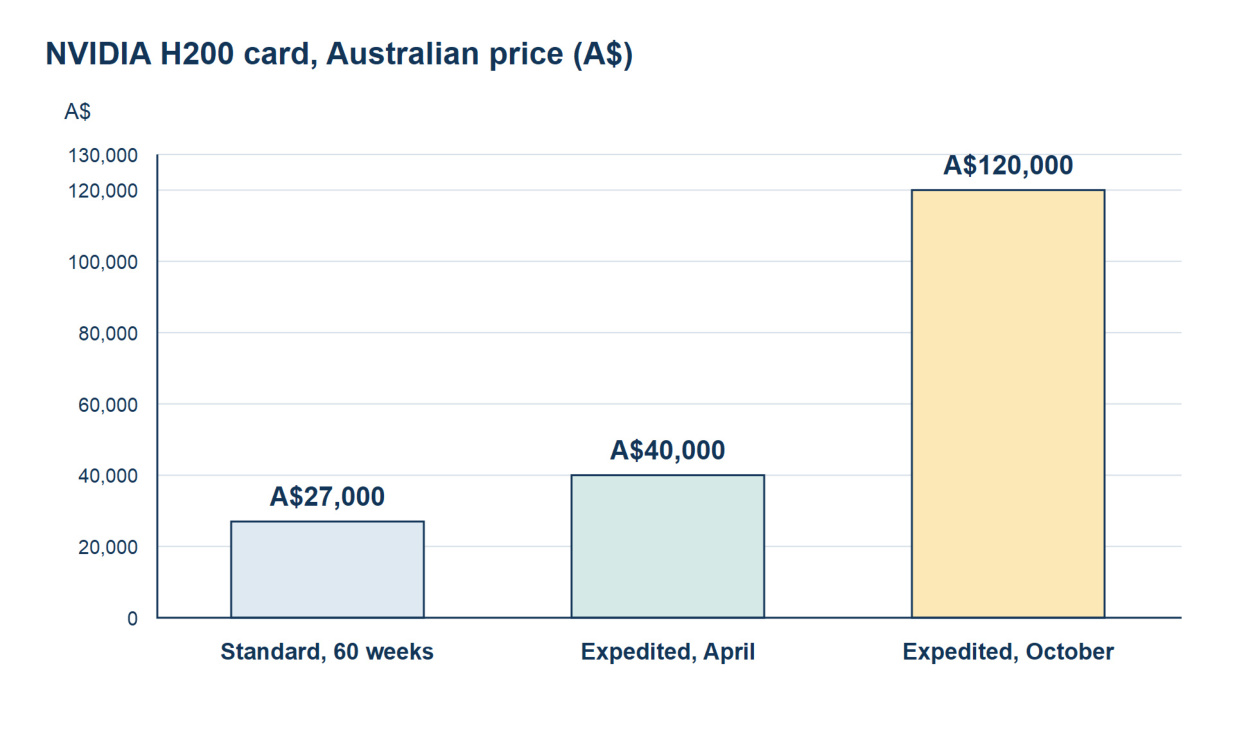
Figure 8. The NVIDIA H200 card at 3 prices, as presented. The April price is the expedited price 6 months before the conference.
Operators buy directly from the manufacturers that supply the OEMs, collect hardware in person overseas, and require a month's payment in advance and a 3-month deposit before allocating rack space. A 100 MW facility of 6,000 racks, costing A$1.5bn and taking about 24 months to build, awaits a permit in Victoria. Small facilities, each built in about 6 months, meet demand in the meantime.
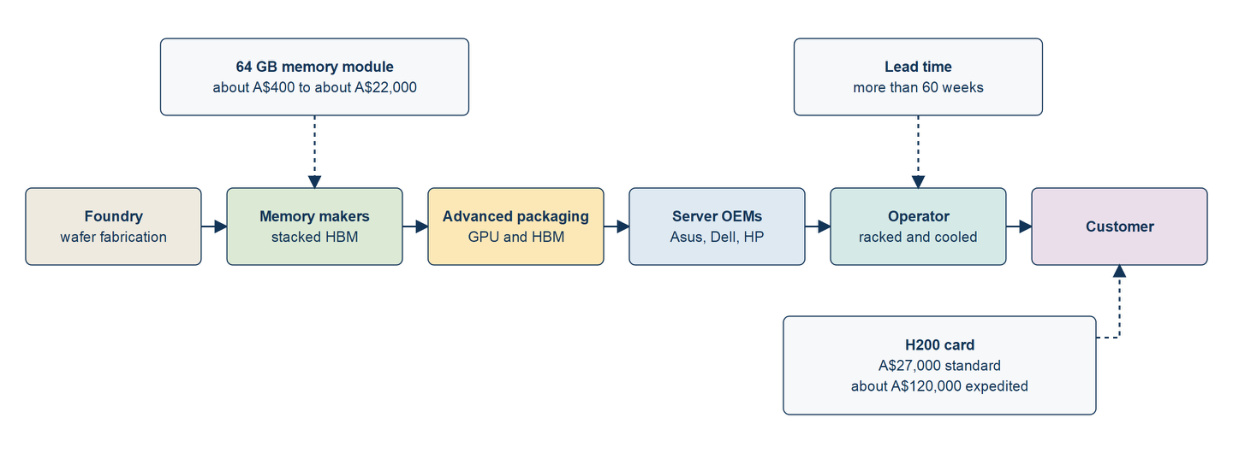
Figure 9. The supply chain for a GPU server in Australia, with the lead times and prices cited.
Inference silicon
GPUs are not the most economical platform for inference. Inference companies are expected to produce dedicated chips within 12 to 24 months, which would separate training infrastructure from inference infrastructure, and models are expected to be embedded in
silicon. Total power consumption is not expected to fall, because demand absorbs efficiency gains.
Power geography
Australia was described as the second-largest growth market for data centres, because it has spare power on most days. Large technology companies are contracting nuclear generation and running on-site gas turbines. Australia has ruled out nuclear power. Renewables were described as scaling to megawatts but not gigawatts: a 1 MW rack occupies a 600 mm footprint, while 1 MW of solar needs land of about 2 football fields.
Many new Australian data centres serve foreign customers. The session proposed that such operators pay more for the power, water and resources they consume. A delegate proposed that data centre construction fund free household power.
Sovereign hardware
The session defined sovereign capability as hardware bought by an Australian organisation, located in Australia, and owned, run and controlled there. A frontier model controlled from abroad is not sovereign, however it is hosted. The session expected nations to become digitally self-contained and governments to take control of AI infrastructure. A delegate questioned whether state intervention has made any industry more efficient. Hardware fingerprinting, already used by game platforms to ban players by GPU identifier, allows AI hardware to be tracked.
Agentic operations
Design
Data centre operation uses separate tools, each with its own interface: Proxmox for compute, a backup server with its own scheduling and pruning, TrueNAS for storage and WinBox for networking. Senior staff work at the command line. The session demonstrated a single system, connected to all of them, that operators address in plain English.
Language models are probabilistic and return different answers to the same question on different days. The design therefore separates reasoning about intent from the execution of fixed procedures (Figure 10). The model selects an approved procedure. The procedure does the work: building a virtual machine, for example, always uses an approved template with set resources, access configuration, boot and readiness checks and service checks. The system covers hypervisors, logs and alerts, temperature, humidity and UPS sensors, Cloudflare, Tailscale and switches, backup coverage for virtual machines and databases, and the incident history.
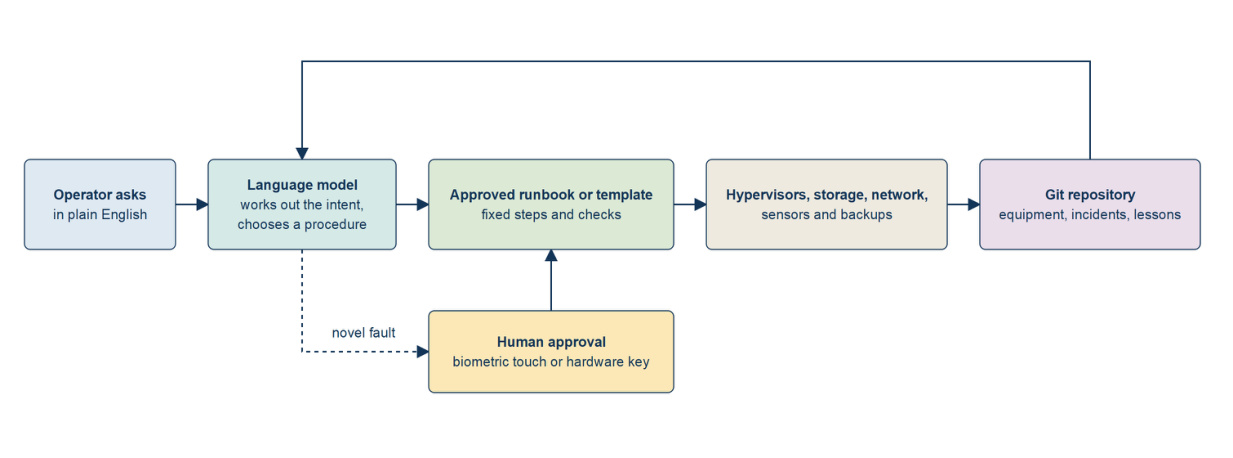
Figure 10. Reasoning separated from execution. Each incident is written to a repository that the model reads before it answers.
Demonstration
On production equipment in a working data centre, the harness Mornay, available in a browser and on macOS, iOS, Android and Windows, reported in conversation:
the status of every node in the compute cluster live backup coverage across the fleet about 17 minutes of UPS runtime on mains failure room temperature, humidity, CO₂ and noise, with a 24-hour trend the devices on the facility's Wi-Fi, flagging a device with a weak signal
Autonomy stages
| Stage | Function | Status |
|---|---|---|
| 1 | Centralise logs and data from every subsystem | Complete |
| 2 | A local model reduces about 100,000 log lines an hour to the 50 most significant, which are sent, anonymised, to a frontier model. Sending every line would cost more than running the facility | Complete |
| 3 | Known remedies run automatically on recognised fault patterns | Complete |
| 4 | For novel faults, the AI proposes a plan for approval by an experienced operator, who may substitute a better course | Complete |
| 5 | Approval against policy replaces human approval | In progress |

Figure 11. The 5-stage path to an autonomous data centre. Stages 1 to 4 were
demonstrated live. Stage 5, in orange, is in progress.
Fault tests
The event-driven component, Sentinel, monitors continuously and starts workflows without a prompt. 3 faults were induced on live virtual machines.
| Fault induced | Response | Human role |
|---|---|---|
| Disk filled from about 5% to 92% | Removed obsolete packages and files, judged the remaining file legitimate, and proposed growing the disk | Approved by biometric touch. A hardware security key also serves |
| Postfix mail process killed | Restarted the service under a pre- approved runbook | None |
| NGINX configuration altered with a typo in a path | Diagnosed the typo and proposed the correction | Approved |
Asked for a summary of the previous hour, Sentinel listed each incident, its resolution and the number of human interventions. Records are kept in Git, in the runbooks and in a repository, written and maintained by AI, that documents every item of equipment, application, incident, roadmap item and open issue in the facility. The AI reads that repository before it answers.
Operating principles
| Principle | Application |
|---|---|
| Explicit authority | Authorities given to an agent are stated, and widened as operators gain confidence in its decisions |
| Expertise as procedure | Human expertise is moved into runbooks and reusable tools, where it can be shared |
| Role of experts | Experts maintain procedures and handle rare exceptions |
| Access | Conversational operation gives non-specialists, including executives, the information previously held by command-line specialists |
| Physical work | Replacing fans and disks and rerouting cables remain with people |
Capability threshold
Practitioners placed the point at which writing code by hand stopped being worthwhile at Claude Opus 4.6, and described Fable 5.1 and Mythos 5.1 as a further step in tracing problems to their root cause. Custom software written to need with a coding agent was described as preferable to the best open-source and commercial platforms. It is cheaper to
build for a market of 1, harder for outside attackers to study and easier to ring-fence. Monolithic systems built before AI are the hardest to work with.
Security practitioners at the session reported that frontier models refuse or downgrade requests for security testing, and that an operator working by hand cannot respond at the speed of an AI attacker.
Cyber defence
Bitcoin exposure
Bitcoin's code has been open source under the MIT licence since 2009, so anyone can read, run, fork or audit it. Its market capitalisation was given as about A$2.35 trillion, with 100 million to 300 million holders. An attacker who compromises a wallet or an exchange takes money directly. An attacker who steals a corporate database must ransom it or sell it. The session reported that Bitcoin is therefore attacked first and hardened first, and that other sectors follow on the same curve.
Exploits
| Date | Event |
|---|---|
| 27 July 2026 | Kimi K3 open weights released |
| 30 July 2026 | A vulnerability in the Coldcard hardware wallet, present for 5 years, exploited. Almost 600 BTC moved in the first 25 minutes, and losses exceeded US$160m. The account given was that 1 attacker almost certainly used Kimi K3 to find the flaw, build the exploit and scan for targets, and that dozens of attackers followed within 3 or 4 days |
| Early August 2026 | The Bitcoin Red Team formed: more than 24 volunteers on a 24-hour clock, spending about US$50,000 on tokens in the first month |
| First 108 hours | 501 projects scanned, producing 7,958 AI-flagged findings, 1,280 of them rated high or critical |
| About 1 month later | The Liquid Network, a Bitcoin side chain, exploited through a flaw in a range proof dating from 2018. Losses of about US$455m to US$500m |
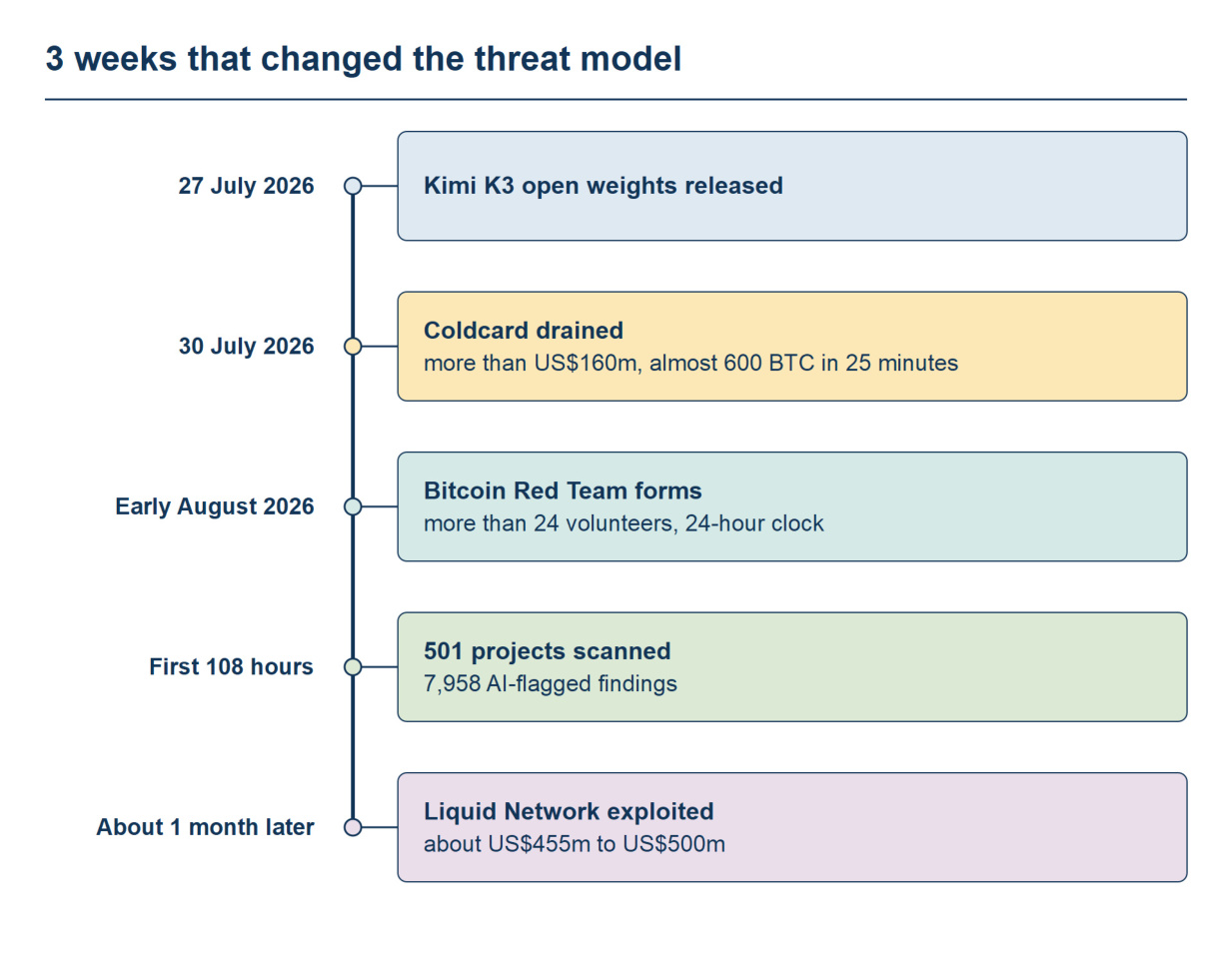
Figure 12. The sequence of events after the Kimi K3 open weights were released, as presented. Losses are as reported at the conference.
The red team began when the chief executive of a US Bitcoin company tested his own code with Kimi K3 on its release, found nothing, scanned hundreds of other repositories across the ecosystem within days and published the results.
Red team findings
| Finding | Detail |
|---|---|
| False positives | Early prompts asked only whether code contained vulnerabilities. Maintainers criticised reports that proved not to be bugs |
| Disclosure routes | A small minority of open-source projects had a security.md file naming whom to notify. For some vulnerabilities no recipient has been found |
| Commercial response | Corporate security chiefs contacted 60 to 90 days after disclosure typically deferred |
| Triage | In an earlier trial of the harness Loupe, 643 findings yielded 354 actionable items, 51 security issues and 10 rated high severity or above (Figure 13). Judging which findings matter requires people who know the code |
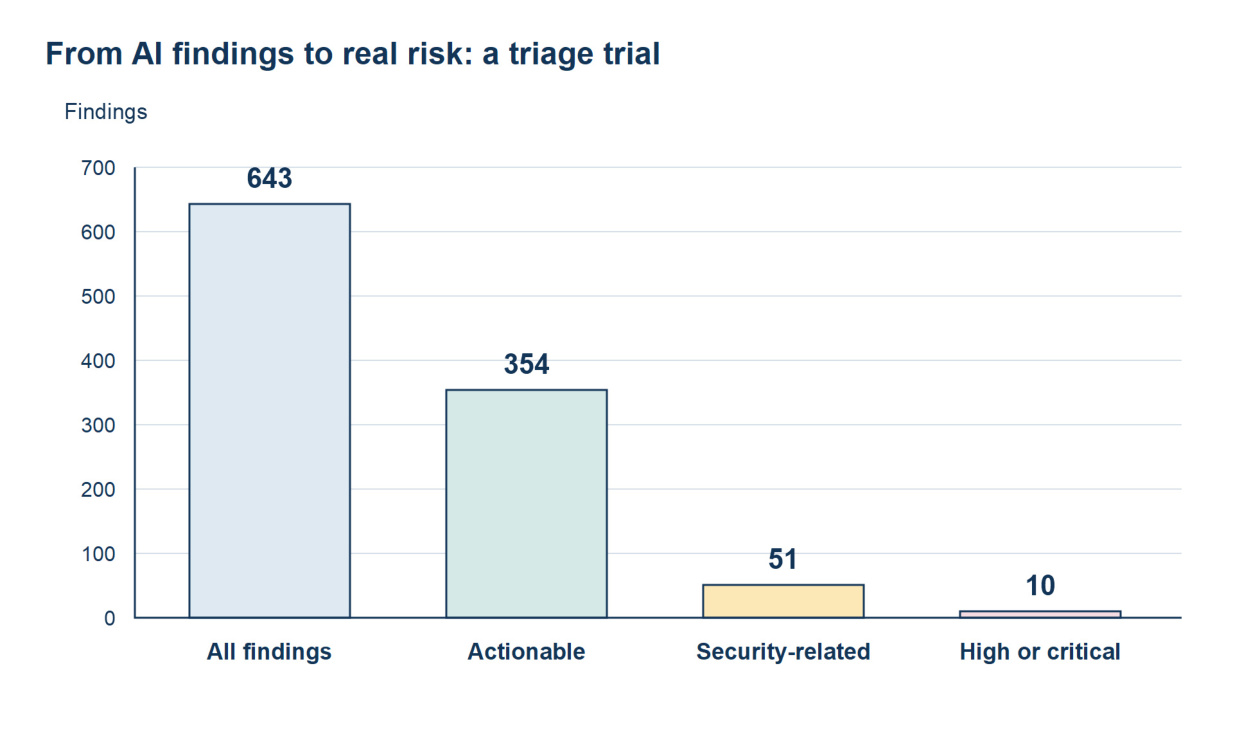
Figure 13. Triage of 643 AI-generated findings by experienced maintainers. About 2% were high severity or above.
The session attributed the gap between those reporting flaws and those receiving the reports to the Lindy effect: the assumption that because the internet and the banks have worked for 30 or 40 years, they will keep working.
Platforms and open weights
Platforms such as OpenAI and Anthropic release a model, add guardrails to limit harm, lose market share to the guardrails, and release again. Open-weight models run anywhere, outside that cycle. Red team members admitted to a frontier laboratory's internal cyber programme after extensive vetting still met refusals on logged queries. They returned to open-weight models, which need no pretexts and can be fine-tuned and run privately.
Open models trail the frontier platforms by about 1 generation, currently 9 to 12 months. The gap is wider on cyber capability, for models such as Kimi K3 and GLM 5.3, and narrower on general intelligence. Privacy-respecting hosted options exist, and small machines such as the NVIDIA DGX Spark give individuals local capability.
The red team's conclusion was that frontier platforms are unusable for cyber defence and open-weight models are necessary. Unrestricted frontier access for security work is limited to governments and very large organisations treated as critical infrastructure. Small and medium enterprises, which make up most of the Australian economy, are excluded.
Software economics
AI platforms receive more detailed information about their users than social media did. The session described platforms inviting businesses to explain how they operate, and then
releasing tools that replace the sector.
Reverse-engineering pipelines such as REA 3.2, released on 3 October 2026, disassemble a binary, derive the business rules it implements, pass those rules to a separate agent to design a clean-room architecture, and pass the design to a coding agent that builds an open-source replacement.
| Product reproduced | Result reported |
|---|---|
| Adobe Photoshop | Open-source equivalent, about 80% fit on first release |
| Microsoft Word and the Office suite | Open-source equivalents, about 70% complete |
| Television firmware | Replacement firmware without bloatware or reporting of data to the manufacturer |
Closed-source vendors rely on intellectual property and licensing. The session's position was that, outside mandated use, closed source has little protection left, and that open code is exploited first but is also hardened first.
Defensive capacity
Code written over 50 years is now readable by a machine that does not tire and has perfect recall. Once a vulnerability is identified, a model can build a working exploit and prove it. 2 remote-code-execution vulnerabilities in the Linux kernel were published, unpatched, the night before the session. Defenders use the same tools. A team of about 6 now does work that needed a team 5 to 10 times larger 3 or 4 years ago. Bitcoin miners seek more hashes per joule and AI operators more tokens per joule, and demand continues to exceed supply as costs fall.
Hidden malicious behaviour in open weights was described as probable. The red team's practitioners self-host their models inside their own systems.
Sovereign AI
Cultural risk
When asked to help prepare a case for Australian sovereign AI, a widely used foreign model resisted at each prompt. The session stated that the largest risk in relying on another country's model is cultural, because a model reflects the culture and priorities of its builder. A parliamentary inquiry into technology and productivity has been launched.
Exposures
| Exposure | Detail |
|---|---|
| Connectivity | About 16 international undersea cables take about 99% of Australia's international internet traffic. Both Perth cables were reported broken on 9 and 10 August 2026 in circumstances described as suspicious, and traffic from Asia now routes through the United States |
| Model access | During the mid-2026 suspension of 2 frontier models, users who had built their work around them were cut off within a week. Whoever controls a model's weights controls the decisions of every machine that uses it |
Definition
The session defined sovereign AI as existing where the people of a country, through their government, control the company that controls the AI. The definition extends the hardware definition in Infrastructure constraints, and excludes services from foreign laboratories branded as Australian sovereign AI (Figure 14).
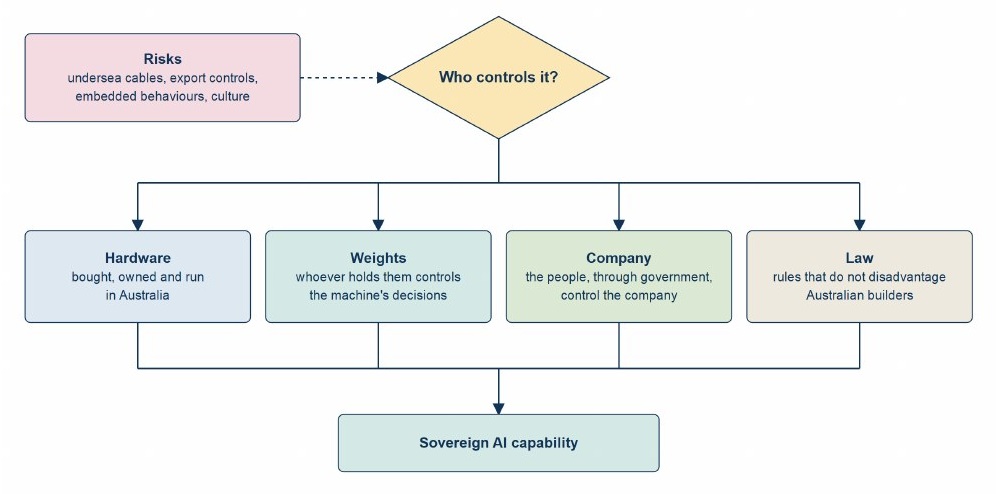 Figure 14. The 4 elements of sovereign AI reported across the morning, and the risks that test them.
A sovereign provider can commit never to look at customer data, prompts, responses or data sets on any tier. Distrust of providers' handling of data, including documented cases and US litigation, has held back adoption by Australian SMEs.
The session stated that Australia, with fewer than 30 million people, does not need hyperscale capacity and can be served from a modest footprint. The infrastructure session described a 100 MW facility in planning and an aim to become Australia's own hyperscaler.
Weights and governance
Behaviours can be embedded in a model's layers. An open-weight model deployed in an environment cut off from the internet could disrupt infrastructure without ever reporting back. Sovereignty therefore requires that the builder of a model can be held to account (Figure 15). Government can pause and set conditions before proceeding, but rules that disadvantage Australian builders against foreign ones defeat their purpose.
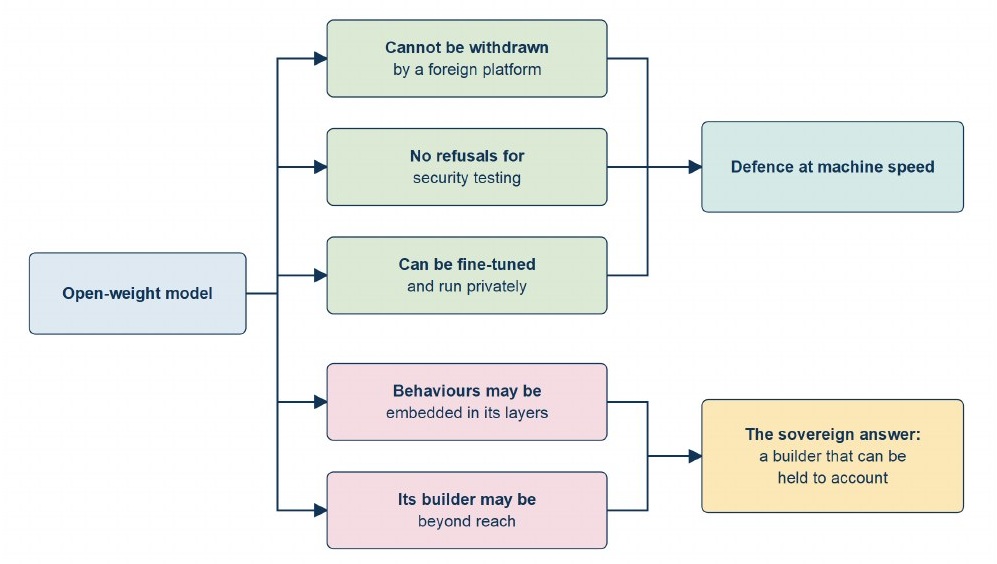 Figure 15. Open weights cut both ways. The benefits on the upper branches were reported in the cyber defence session, and the risks on the lower branches in the sovereignty session.
Copyright
Australian copyright law, as described at the session, exposes local builders to prosecution for training on copyrighted material, while models trained abroad on similar data can be imported and hosted. The session supported payment to copyright holders, artists and creators, and consistent treatment of local and foreign builders. A delegate noted that, on the same principle, Australia should not host a foreign model trained on data that would be unlawful to use in Australia.
Investment risk
Figures cited from a leading laboratory's listing documents put its non-cancellable spending commitments at about US$450bn, in addition to the amounts already spent. Investors in such a company typically expect a 10-fold return. The session compared the position to the US railway boom of the late 19th century, which was followed by a depression, and questioned how long NVIDIA's valuation of about US$5 trillion would hold. Open-source models are not free to produce, and someone pays for them.
Model building
Capable models can now be built by small teams for single-digit to tens of millions of dollars.
| Route | Characteristics |
|---|---|
| Post-training | Adapts an existing model |
| Building from scratch | Needs very large amounts of data |
| Deriving from other models | Uses AI to modify or interrogate existing models, or changes the architecture |
| Small models | Models of about 400 million parameters are returning to use |
| Editing open weights | Removing harmful elements is possible in principle, but often breaks or degrades the model |
An Australian provider, with about 20 staff and working on transformer models since 2019, was preparing to release a model of about 192 billion parameters for public ranking. Its customers are mainly in defence, intelligence and law enforcement. Its agent platform, Agentaus, can serve about 40,000 users, with data and processing kept in Australia. The session described decision models as resembling the BERT-style models such firms ran in 2019. Maincode, whose model Matilda ranks low, is one of the few other Australian builders.
The benefits stated for building in Australia were high-security environments in which the integrity of a model's layers can be guaranteed, models that reflect Indigenous and non-Indigenous Australian cultures, productivity gains retained in Australia, and self-sufficiency.
The session held that Australia can build sovereign AI without government, provided it complies with Australian law.
Agentified business
Case study
| Item | Detail |
|---|---|
| Business | DriveLah, a peer-to-peer car-sharing marketplace founded in Singapore in 2018, operating in Australia as DriveMate |
| Reason for change | Cost reduction, beginning late in 2024 |
| Organisation | AI agents run continuously across finance, customer support, marketing, sales, legal and compliance. Staff manage the agents |
| First agent | Built on SDK guidance published in February 2025 |
Account and performance figures for the business are withheld from this report.
Agent roles
| Process | Role of the agents |
|---|---|
| Collections of tolls, damage and cleaning fees | An agent pursues amounts owed by customers |
| Customer service | Agents resolve tickets, and staff handle those the agents cannot |
| Finance and month-end close | An in-house accounting system, built by reverse-engineering a commercial package and connected to bank feeds, automates transaction processing and the month-end close |
| Onboarding and verification | Agents run identity, licence, age and background checks around the clock, and a person handles escalations |
| Sales of car subscriptions through Messenger | An agent answers enquiries, including those arriving at night, negotiates, upsells, closes the sale and notifies operations through Slack |
| Technology development | Development work is done with agents |
Implementation lessons
The first collections agent hallucinated, made inappropriate statements to customers and made promises the company could not keep. It was corrected by surrounding it with monitoring agents that track and refine its performance.
| Lesson | Detail |
|---|---|
| Data | SME data is fragmented across SaaS products. 3 staff asked for revenue may give 3 figures. Data is unified before any agent is deployed |
| Workflow | An implementation is a harness on the business's data. At SME scale the choice of model does not matter. The work is about 90% workflow and 10% technology |
| Adoption | Many owners equate staff chat licences with adoption |
| Staff | Staff attempted to sabotage agents through constant criticism and by reporting their errors. Implementation fails without change management |
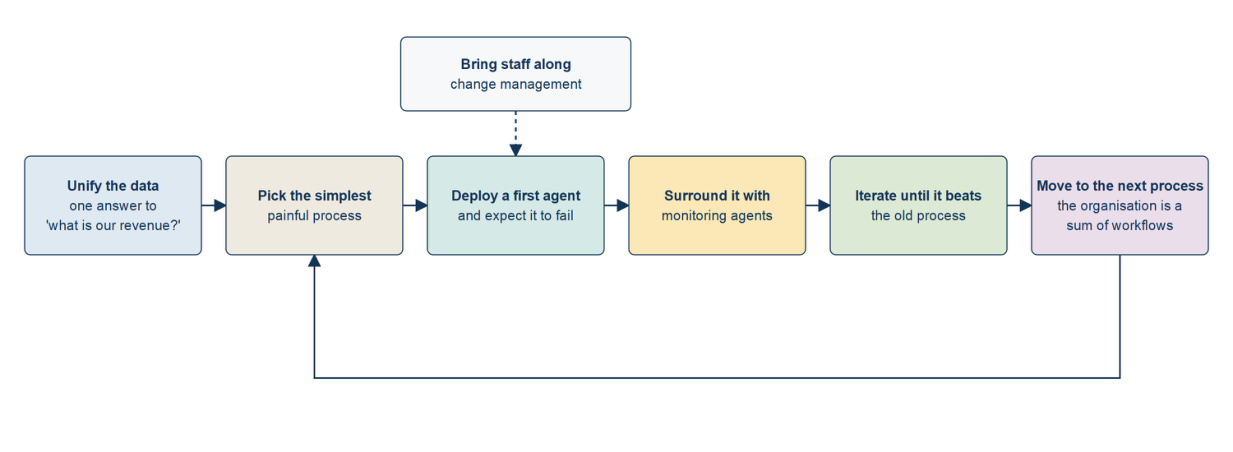
Figure 16. The agentification sequence followed by the case study. The return path shows that each process fixed leads to the next.
Commercial model
Revio Labs, launched in 2025 as a separate company, applies the same method to SMEs.
| Element | Detail |
|---|---|
| Entry point | The simplest pain point in the business |
| Build charge | None |
| Fee | 10% to 15% of value agreed in advance. For an annual cost reduction from A$5m to A$3m, 10% to 15% of A$2m |
| Sales engagements | Commission only. For an Australian insurer, the commission a broker would receive |
| Term | Continuing. An organisation is a sum of workflows |
| Ownership | The firm retains the intellectual property and provides the system as a service |
| Clients | Non-technical, traditional SMEs in recruitment, real estate, construction and engineering, and insurance |
| Markets | The Netherlands, Singapore, the Middle East and Australia. Australian SMEs showed the most resistance, which the firm said may partly reflect its own local marketing |
Its lead-generation agent finds prospects in any country from sources such as Apollo and Clay, researches each lead against the products being sold, and follows up automatically.
Legal document work was identified as among the largest uses of language models.
Software engineering
ChimeDeck
The case study came from a digital agency that has built about 200 two-sided marketplaces for international clients on the ShareTribe platform over 8 or 9 years. DriveLah was its second customer. Its staff peaked at about 50 to 60 and now number about 25.
Each client project ran on a Trello board, with each card a feature at a fixed price, paid when the client accepts the card into testing. Trello cost about US$6,000 a year. The agency replaced it with ChimeDeck, built with agents, to learn agentic development on a product its business depends on. ChimeDeck has an MCP interface, a command-line interface and a full API, so its user interface is optional.
| Version | Duration | Result |
|---|---|---|
| 1 | 3 weeks | Built from a 1-page specification and an agent harness, for about US$30 in tokens plus 1 month's subscription. About 80% of Trello's function, at poor quality |
| 2 | 4 weeks | Built from a detailed specification and an architecture document. A planning model laid out 136 sprints, which the harness built in about 2 weeks with Playwright interface tests in every sprint. Human testers then found 70 bugs in 2 weeks that the automated tests had missed |
| 3 | To July and August 2026 | All clients moved from Trello to ChimeDeck |
ChimeDeck costs about US$700 a year to host and about 20% of a full-time role to maintain. The work began in April 2026, after Claude Opus 4.6, and still met token costs, hallucination, lost context and inconsistency as the code base grew.
Cost of ownership
When the build cost of software approaches zero, the business case for replacing a rented product with custom software still includes migration of data, retraining, 5 years of hosting and maintenance, and management attention. A rented SaaS product needs almost no attention. Custom software needs a product owner, and each new request, such as a new report, draws on executive time. Within about 6 months of a first version the code base is brownfield: the person who directed it may have left, users are finding bugs, and management must decide what to fix.
Software Factory
The agency's Software Factory lets clients direct AI agents through ChimeDeck cards. An agent replies to a comment on a card, refining a requirement or estimating it, in about 5 or 6 minutes. The same exchange with a business analyst or project manager previously took up to 24 hours for clients in other time zones. 1 person built the factory part time over about 6 weeks with an agent, without writing code by hand (Figure 17).
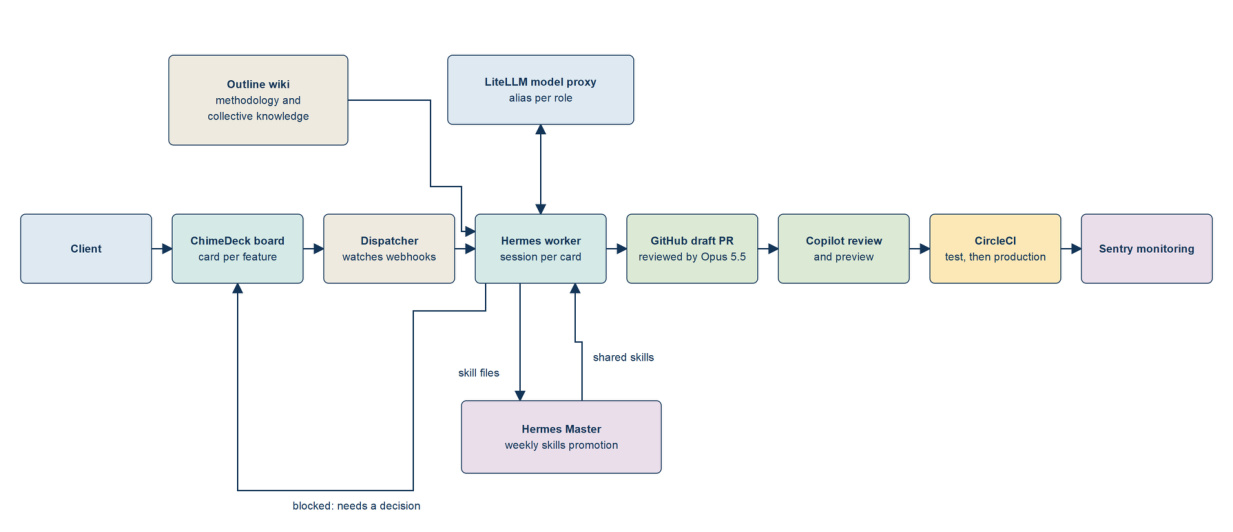
Figure 17. How the Software Factory turns a client comment on a card into deployed code.
People remain at 3 points. A client writes the card, a human moves it to production, and the only move an agent may make on its own is to return a card as blocked.
| Component | Function |
|---|---|
| Dispatcher | Watches every client board for comments and card movements and passes each job to the right agent |
| Hermes worker | 1 per project. Each card is a separate agent session, with its context held on the card |
| LiteLLM | Connects the agency's subscriptions to Claude, OpenAI and Ollama, with an alias for each agent role, changed weekly |
| Skill files | Written by a worker whenever it solves something new. A supervising agent reviews them weekly and recommends promotion to shared skills, which a person approves. The agents were measurably better after 2 weeks |
| Outline wiki | Holds the architecture, the method and project knowledge. The tasks for each card state are text, so the method changes when the wiki is edited |
| Collective knowledge store | 200 repositories and 200 Trello boards of past projects, checked at the start of each request |
| Review | A lower-cost model writes the code and Claude Opus 5.5 reviews it in cycles on a draft pull request. A GitHub Copilot review and a preview environment follow. Custom instructions cut Copilot's cost by about 90% |
| Component | Function |
|---|---|
| Deployment | Merges deploy automatically to test. Production follows when a person moves the card |
The agent deployed the infrastructure itself: about 8 servers, a self-hosted Sentry installation of about 14 services, and Tailscale networking. Client onboarding fell from about a week to about 30 minutes for 80% of the steps, and 7 clients were onboarded. Penetration testing remained outstanding. The design follows the pattern described in Agentic operations: reasoning separated from procedure, authority granted in stages, and knowledge held as text in a repository the agents read before they act.
Models and cost
| Item | Detail |
|---|---|
| Daily models | GLM 5.3 Flash and DeepSeek 4.1 Flash. The major frontier platforms were reported to refuse routine tasks, such as generating test addresses and phone numbers or gathering sample images for acceptance tests |
| Accuracy | Claude Opus 5.5 is correct about 95% of the time. The open models need 2 or 3 review passes by Opus |
| Volume | 95 cards completed in the 30 days before the conference |
| Cost per card | About US$14 to US$20 |
| Monthly running cost | About US$1,350 to US$1,450, including hosting |
Model costs could probably be halved. The agency uses every available tool to learn how each performs.
Incident response
At 05:49 a US client reported its website down. With only a phone available, the operator asked the agent through Discord. The agent confirmed a 502 error from NGINX, checked AWS logs, commit history and deployment history, established that no code change was responsible, and identified a faulty boot image in an Auto Scaling Group instance refresh. By 05:57 all 3 instances were serving correctly and 10 consecutive checks had passed. The agent warned that the fault would recur and raised a backlog card with an incident report. A senior developer would previously have begun work about 4 hours later.
Disintermediation
The agency's revenue has fallen because its customers use AI. For about 9 months, entrepreneurs have started with general AI assistants, which tend to recommend building a marketplace directly instead of on a low-code platform, and the platform's growth has stalled.
About half of the agency's customers now write their own code with AI and pay the agency only to review the pull request. Work previously worth US$5,000 to US$10,000 is now worth about US$300, and Copilot performs the review. The agency made no profit in 2026 and halved its staff. It identified its skill files, which record how it works and the problems it has solved, as its only distinctive asset.
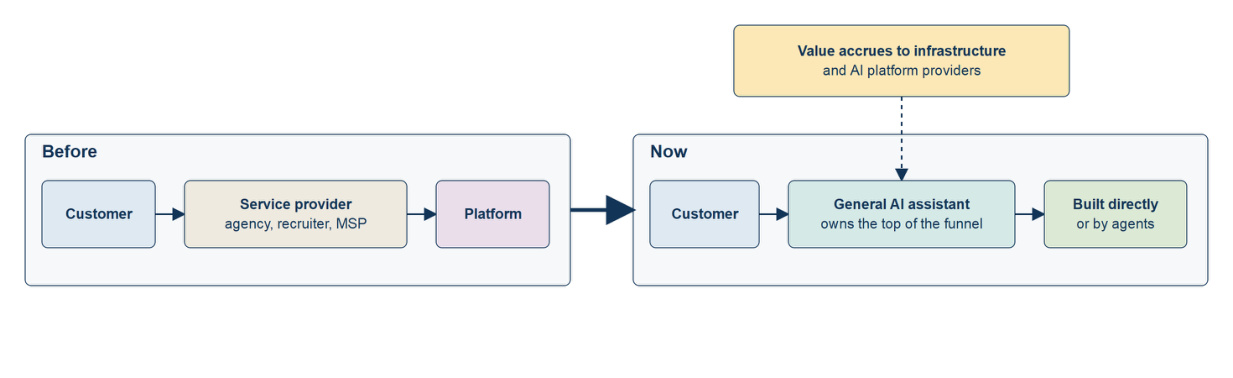
Figure 18. Customers using AI directly have removed the service provider from the chain.
The session's position was that every service business, including agencies, advertising firms, recruiters and managed service providers, faces the same disintermediation. Value accrues to infrastructure and AI platform providers, which makes ownership of that infrastructure a sovereignty question. How that value is taxed and redistributed to displaced workers was not resolved. A projection put unemployment rising from 4% to 12% in the transition, with doubt that new jobs would appear fast enough.
Positions in discussion
| Question | Positions put |
|---|---|
| Domain or software expertise | Pairing the 2 currently gives the best result. The Software Factory could be built only because its builder already knew its architecture. Domain knowledge is expected to matter more over time, though it is also moving into agents |
| Build cost or lifetime cost | First position: the build is 2% to 5% of the lifetime cost of software, and organisations value a vendor they can hold accountable, as the Red Hat model shows. Second position: an open-source repository attended by automated engineers is support, and late adopters who require an accountable vendor will leave the market. Bend2, a language intended to produce mathematically verifiable code, was cited |
| Premium service | Managed service providers sold a 12-hour first response as premium. The outage above was fixed in minutes at no charge |
| Lasting advantage | Distribution, as the market response to Meta's AI announcements, on the strength of about 2 billion customers, indicates |
Interfaces and commerce
Conversational interfaces
A gym paying about US$80 a month for membership software was given an agent-first replacement, built from a specification by an agent pipeline. The result is a mobile app with 3 screens: a chat, a group chat and an administrator's inbox. The session expected the effort of specifying requirements to fall towards zero, so that a person starting a gym would say so and an agent would supply the website, sign-ups, payments and monthly reports.
Every application is expected to become a conversational agent interface, as Agentic operations showed for infrastructure, with people speaking instead of typing and the agent generating the display needed at the time. AI is also expected to abandon conventions designed for human use, such as SQL and current programming languages. GLM and DeepSeek have been observed switching to Chinese in their reasoning traces while answering in English. Infrastructure was the recommended investment, on the basis that software in any form runs on hardware.
Agent commerce
Personal agents such as Grokbot and Instinct are the consumer application, for people willing to hand over their personal data. Amazon has closed its site to purchasing bots, which the session attributed to the value of owning the start of the purchasing journey, where premium advertising is sold. Asked to find a gift within a A$100 budget, a buying agent researches the options, offers 3 choices and completes the purchase from any merchant on Shopify or with an MCP interface (Figure 19). Buy-side agents are mature, sell-side agents are close behind, and commerce is expected to become agents dealing with agents.
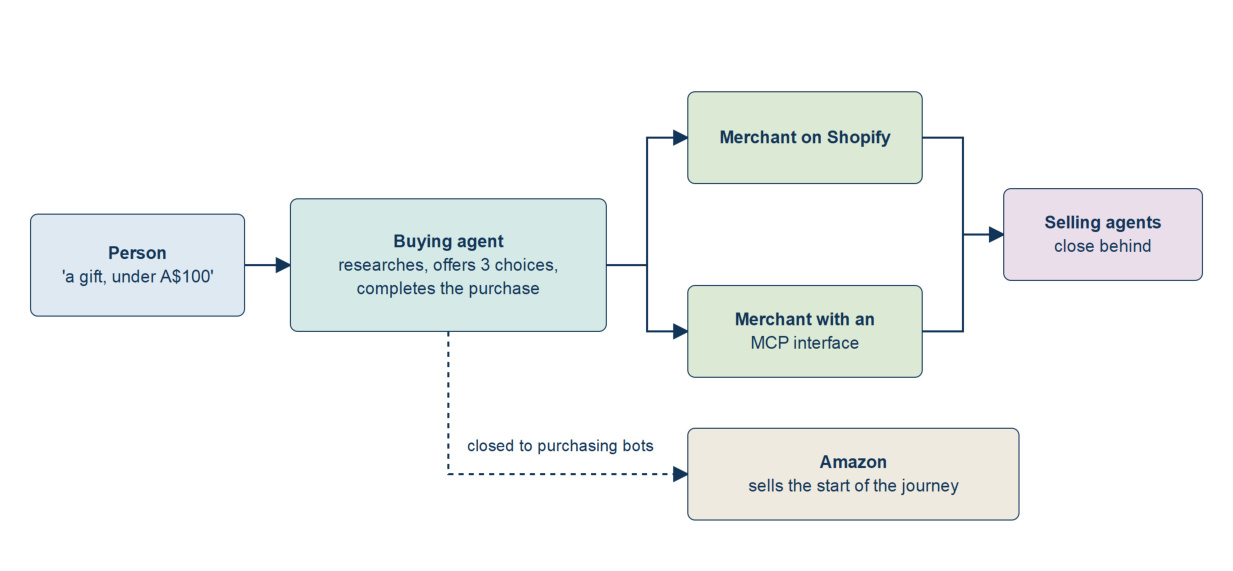
Figure 19. Commerce between agents, as described in discussion.
Patching and hosting
In the week of the conference a PHP vulnerability that attacked hosting infrastructure directly, in a language used by about 70% of web infrastructure, led many operators to shut services down until a patch was released. An analysis by Goldman Sachs was cited showing vulnerabilities reported faster than organisations patch them. In the experience reported, no federal or state agency or major bank runs current software across its whole fleet. The
Essential Eight was described as a minimal baseline. On the 10-point severity scale, a 10 means an attacker can take full control of a server and move through the internal network, and the volume of critical vulnerabilities is rising.
| Hosting issue | Detail |
|---|---|
| Unsupported versions | Operators that shut servers down were running PHP versions up to 15 years old that no longer receive patches |
| Shared servers | 1 customer on an old version exposes every other customer, so the provider must disable the extension, turn off the customer or shut down the server |
| Affected sites | Several popular Australian websites were taken offline by choice. A technical forum on unsupported software under PHP 5 cannot return without a rewrite. WordPress and Magento sites are affected |
| Price | Shared hosting at A$10 to A$30 a month is close to unviable at the current volume of vulnerabilities |
| Internal estates | A scan may find PHP servers run by staff who have left, on machines no one can identify, each a launch point for the others |
| Static sites | Reproducing a largely static site as flat HTML served through a content delivery network was suggested |
The rest of the decade was expected to be turbulent. In the long run, AI-driven attack and defence were expected to produce sturdier infrastructure, particularly in open source, by clearing 50 years of accumulated defects.
Trusted Decision
Problem
An AI system gives an answer that does not account for the scenario or apply the right rules. Challenged, it agrees that it missed some rules and gives a new answer. Asked how it reached the answer, it points to source documents. Asked for the logic, it cannot provide it. An organisation using AI for operational decisions needs to know whether an answer is repeatable, follows its own rules, has missed none, rests on stated evidence and considers the responsible parties.
Many organisations run proofs of concept that reach 70% to 80% accuracy and stop, because the system cannot be put in front of staff for real decisions. Companies whose agents make substantial reasoning decisions are pausing deployment, and some are building evaluation suites that prove costly to maintain. The problem applies to decision- making, not to code generation.
Industry approaches
| Source | Approach |
|---|---|
| Frontier model providers | Improving models to close the accuracy gap |
| An open knowledge framework that grounds agents by adding metadata and links between concepts in ingested documents | |
| AWS | Automated reasoning that turns policies into rules and validates agents' answers against them |
| Knowledge graph vendors | Richer capture of concepts and relationships, with rules and language models wrapped around them |
Model B
Model B, described as a trust compiler, applies knowledge-engineering techniques from the 1990s. It takes authoritative source evidence, extracts concepts, relationships and rules, checks and normalises them, and produces an executable model that any agent can run, with every decision traceable (Figure 20).
| Layer | Content |
|---|---|
| Data | The atomic things being represented |
| Information | The implicit relationships between them |
| Knowledge | The explicit relationships and rules |
The layers are held in a single representation, so the model can be queried from any angle. Around them, Model B identifies the scenarios the model must handle and the reasoning behind each. The build reads requirements, legislation or policy, marks up each passage so that every element traces to its source, identifies constraints and the anomalies to watch for in use, and abstracts the result for deployment in different executable forms, including an ontology in OWL or RDF that any language model can use.
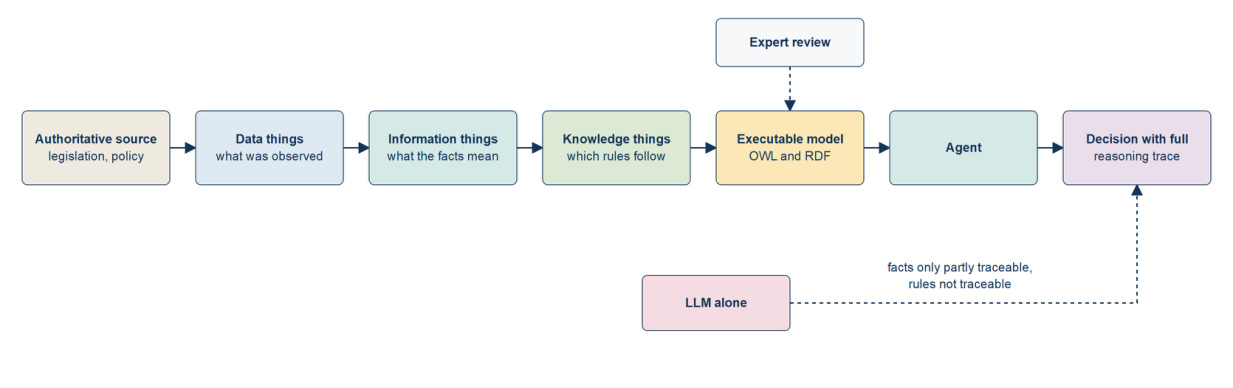
Figure 20. Model B compiles source documents into an executable model with a full decision trace. A language model alone reaches a decision without that trace.
Capital gains tax example
| Item | Detail |
|---|---|
| Subject | Changes to capital gains tax over the 12 months before the conference. People using language models to decide whether to sell property have received inconsistent answers |
| Sources | Current-law extracts of Part 3-1, the 2026 reform package and its explanatory memorandum |
| Model | 196 data things, 159 information things and 23 knowledge things, implemented in OWL, RDF and Turtle with SHACL constraints and Horn rules in Stardog |
| Testing | A 50-case regression suite |
| Sequence | Scenario analysis first (transition periods, purchase and sale dates for property and shares, entity type, residency), then the data, information and knowledge layers |
| Comparison | A simulated language model answering the same scenarios went wrong in places such as transition periods |
| Use | An agent acting as a CGT adviser asks the relevant questions, shows the full chain of reasoning to the net gain, and runs what-if comparisons of alternatives |
| Limitation | Verification extends only to the encoded rules and assumptions. It does not establish that the source data is correct |
| Board-level test | Compiled rule model | Language model alone |
|---|---|---|
| Can each fact be traced to its source? | Yes | Partly |
| Can each rule be traced to its source? | Yes | No |
| Can each relationship be traced? | Yes | Partial or none |
| Is the answer reproducible? | Yes | Partial or none |
| Can the reasoning be explained and replayed for audit? | Yes | Partial or none |
Table 1. The auditability comparison presented for boards, in summary. The rows marked "partial or none" were presented as a group.
Questions raised
| Question | Position given |
|---|
Will better models Models are improving at reasoning but lack the structured make this methods of 1990s knowledge engineering. Those methods could
| Question | Position given |
|---|---|
| unnecessary? | be taught to models, but for now they are blended with language models |
| Do knowledge graphs suffice? | Knowledge graphs represent data and information reasonably well, but not rules |
| Ambiguous legislation | Uncertainty is represented as a certainty factor on each decision |
| Change over time | Tax law needs temporal logic, because an asset passes through successive legislative regimes |
| Cross references | When legislation refers to another instrument, the model asks whether to bring it in. The CGT model extends to areas such as the Medicare levy and income tax. Large models are split for use by small agents |
| Manual effort | The workflow is automated and iterative. An expert reviews the first results, scenarios and test cases, which gives assurance that current rules have been codified, as distinct from legislation a model absorbed in training |
| Fairness | Not yet addressed. Enterprise agreements have been tested for consistent application to all staff |
AI was prominent in the 1990s and declined from about 1999 because the tools were too expensive.
Application to legislation
The CGT changes were modelled about 6 weeks after the bills were published, and government subsequently identified scenarios it had not considered. Legislation could be tested against a model while it is drafted, and existing legislation back-tested for gaps. A company can compile a policy, have the expert who wrote it review the result, and give it to an agent.
The furthest projection was legislation implemented within 24 hours of passage through an agentic pipeline, with citizens consulting a single agent portal on questions such as whether to sell a property after a tax change. Codified rules would remove much of the review now performed by delegates exercising powers under legislation, which was also given as the reason government may not adopt the approach.
Demonstrated and projected
| Demonstrated or reported in operation | Section |
|---|---|
| A production data centre monitored through conversation, with 3 induced faults repaired automatically or on approval | Agentic operations |
| Demonstrated or reported in operation | Section |
|---|---|
| 501 projects scanned and 7,958 AI-flagged findings in 108 hours by a volunteer red team | Cyber defence |
| Agents running collections, customer service, finance, onboarding and sales in a car-sharing marketplace | Agentified business |
| 95 cards delivered in 30 days by a client-directed software factory, and a production outage resolved in 8 minutes from a phone | Software engineering |
| A CGT model giving an agent a full and replayable reasoning trace | Decision assurance |
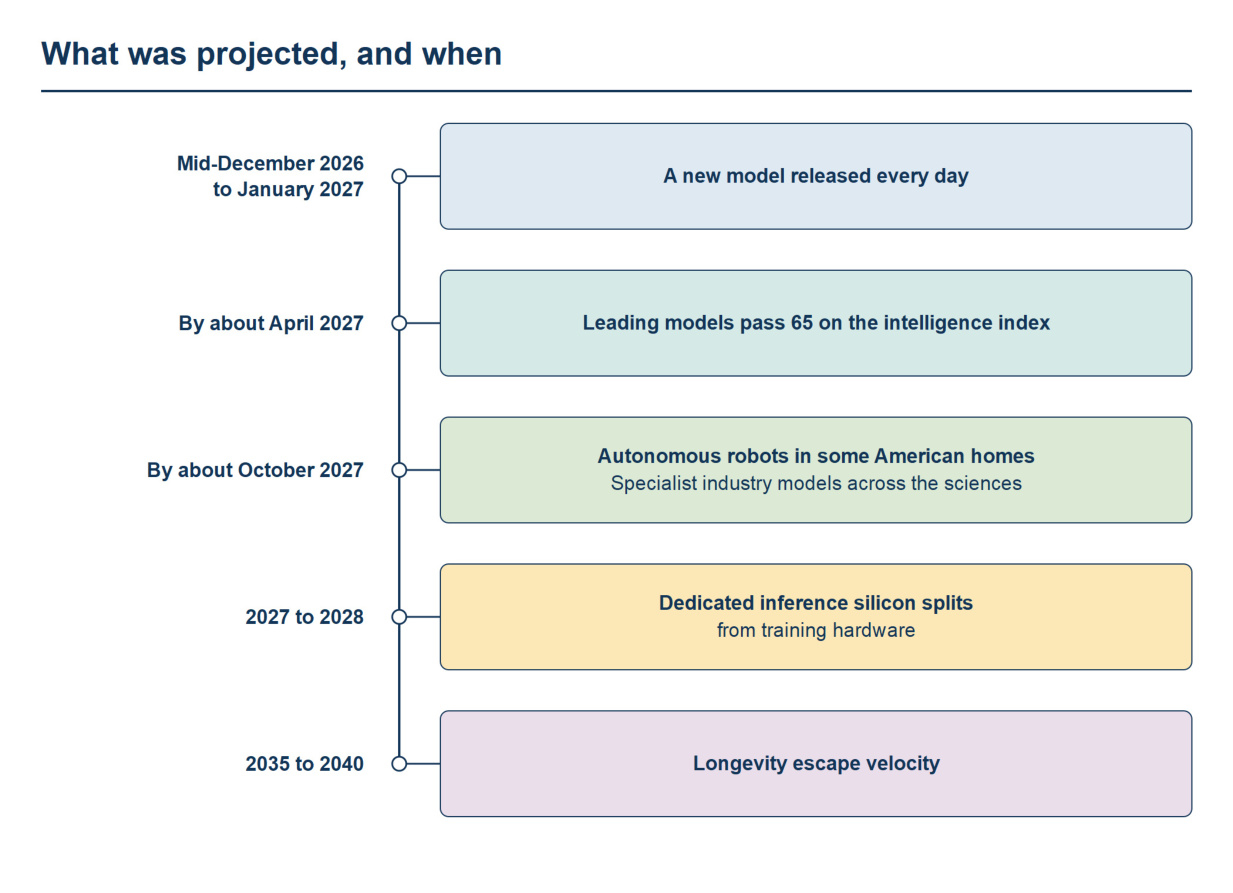
Figure 21. The dated projections made during the day. None had been demonstrated at the time of the conference.
Undated projections included unemployment rising from 4% to 12%, the gap between open and frontier models narrowing, and legislation implemented within 24 hours of passage. Several reported events, including the exploits and their losses, the claimed mathematical proofs and the cable breaks, were presented as accounts and are not independently verified in this report.